End of An Era: The Four Seasons Shutters

Yesterday afternoon, AAC CPA and I had what was the last lunch served at the fabled Four Seasons Restaurant in the Seagram Building in New York City. (More about that later.) Tonight at around midnight, the restaurant will close forever. Since its historic opening in 1959, the Four Seasons has, arguably, been the most famous restaurant in the world.
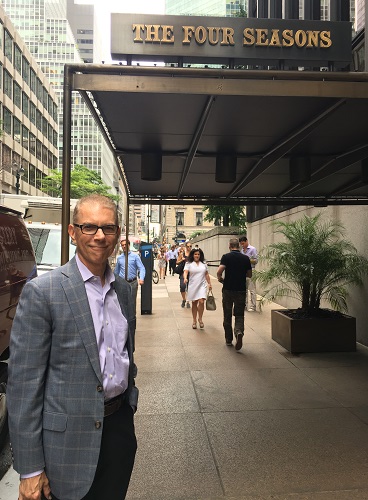
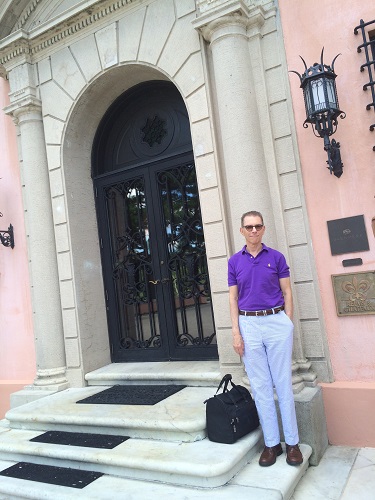
Four Seasons - AAC arrives - 2016-07-15
AAC CPA arrives for the last lunch

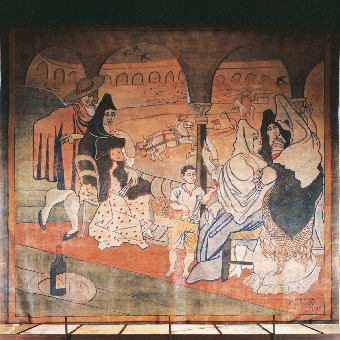
My history with the establishment goes back over 40 years, when I first arrived in New York City, having just completed university in California. I was introduced to the Four Seasons in the fall of 1974, when I was taken by a mentor/friend of mine, Bill Konkoy, whose responsibility it was to show me the sights. We reserved a table in the Pool Room and it is impossible not to be impressed by the walk from the reception/bar area, down that long corridor, past the Picasso “Le Tricorne” tapestry (recently removed in an acrimonious dispute between the owner of the Seagram Building and Alex von Bidder and Julian Niccolini, the owners of the restaurant) and, finally, into the Pool Room. What a thrill!
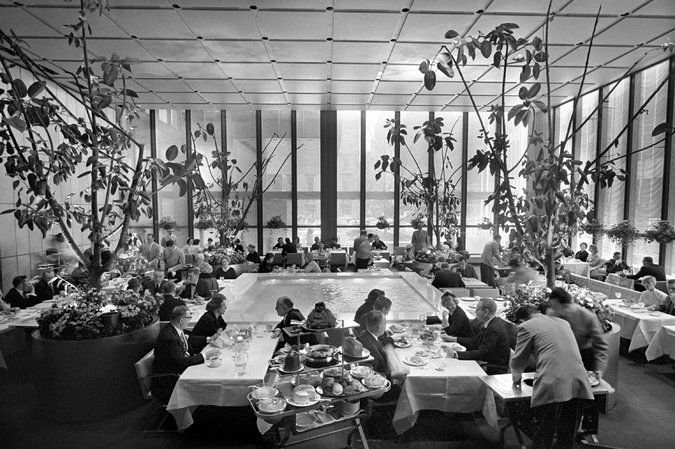
Four Seasons Pool Room 1970s
The Pool Room ca, 1974

Four Seasons Le Tricorne
Picasso’s “Le Tricorne”

It had been Bill’s intention that we would order off the pre-theatre prix fixe menu but, after glancing at the a la carte menu for a moment, he took a “what-the-hell” attitude and we ordered as we liked. By today’s standards the meal was inexpensive but, back then, we spent beaucoup bucks – money very well spent.

For those of you who may be unfamiliar with the place, it was perhaps the first “total concept” restaurant. Designed by architects Philip Johnson and Mies van der Rohe at a cost of over a then unprecedented $4,000,000, the restaurant immediately became the anchor of the brand new Seagram Building, located at Park Avenue and 52nd Street. In the beginning, the space was intended to be a bank or, perhaps, a car dealership. Fortunately, those plans never materialized and, instead, a great restaurant was born.

Aside from the up-to-the-minute architecture, which has never lost its luster and has, in fact, been landmarked, every piece of furniture, chairs, tables, banquettes and more, every piece of crystal and flatware, the chargers at each seat, was designed for that space. It was all perfectly integrated. And more: owing to its name, there were subtle changes of décor for each season, and certain menu items would be swapped out as well.
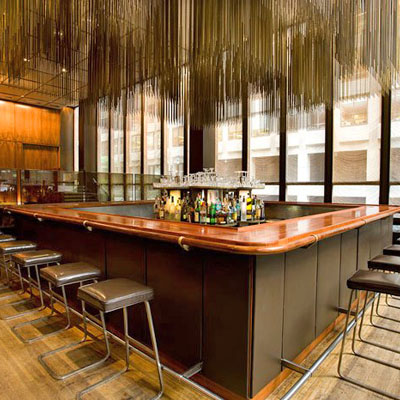
Four Seasons Bar
The bar with the fabulous bronze sculpture by Richard Lippold

Now here’s the thing: the food at the Four Seasons was good, sometimes great, but I don’t think that’s why you went there. You went to the Four Seasons for the total experience. Somehow, you were always made to feel special at the Four Seasons.

I’ve accumulated a lifetime of memories at the place:

To celebrate our 1st anniversary, AAC CPA and I dined there together for the first time. It was a magical night.

When, 9 years later, we were deciding what to do for our 10th anniversary, there was no better place to celebrate than at the Four Seasons. We worked with then manager, the indispensable Julian, who effortlessly stewarded us through the planning stages. For those of you familiar with the restaurant, we took the adjoining private rooms on the mezzanine level behind the Grill Room – the smaller room for cocktails and the larger room for a sit-down dinner for 20. The night arrived and AAC CPA and I were greetings our guests when the late Mike Wallace (of 60 Minutes fame) arrived, strode right over to the bar and ordered a dry martini. AAC CPA and I exchanged a nonplussed glance and I decided to go over to introduce myself. Mr. Wallace looked a bit startled and quickly realized that he had crashed our party. He was there that evening because Eric Sevareid (the famed CBS journalist and elite war correspondent) had retired that day and was guest of honor at a party in another part of the restaurant. Mike looked around with a kind of “oops” expression on his slightly bemused/embarrassed face, murmured “I guess I’m at the wrong party”, and made a hasty exit. Our party, by the way, was a complete success, our famous uninvited guest notwithstanding.
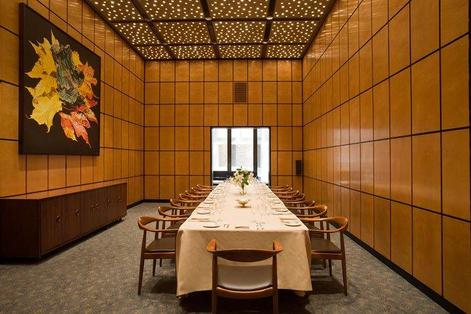
Four Seasons 10th Anniversary Party
Our 10th anniversary party at the Four Seasons

The number of family celebrations are too numerous to count: family and friend’s birthdays, anniversaries, holidays or just stepping out for a night on the town.

AAC CPA and I hosted his late brother, Paul, and his wife, Ann, on the occasion of their 40th anniversary. The Four Seasons always sent over made-to-order cotton candy whenever a special occasion was being celebrated. Ann wasn’t crazy for it, but appreciated the gesture.

Speaking of which: We took AAC CPA’s great niece and nephew, Sloane and Tyler, to a cooking class a few years ago, after which we all sat together at a very long table in the Grill Room and ate what had been prepared during the class. Sloane and Tyler had made quite an impression on the kitchen staff and they were taken back after lunch to play with the cotton candy machine.
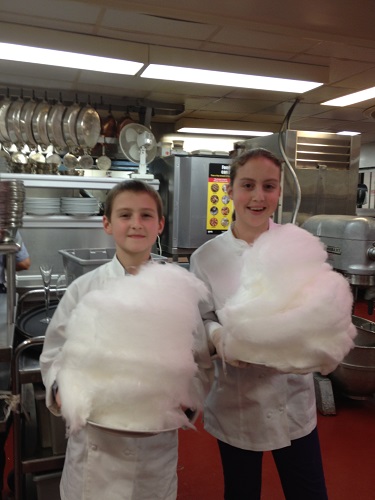
Four Seasons Tyler Sloane
Tyler and Sloane display their cotton candy creations

And then there were the New Year’s Eve lunches. Quite frankly, AAC CPA and I have always felt that New Year’s Eve is highly overrated, especially in New York where the price of everything seems to triple on that night and don’t get me started on trying to find a cab. So a long time ago, AAC and I decided that the civilized thing to do was to have a wonderful lunch at the Four Seasons, come home, and let the amateurs take over.
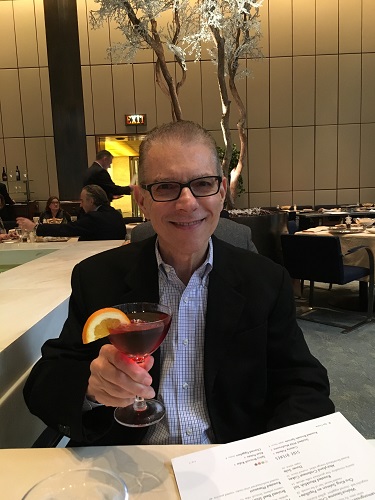
Four Sesaons - AAC 2015-12-31
AAC with a proper Negroni, New Year’s Eve 2015

We were there this past December for our last Four Seasons’ New Year’s Eve lunch. Our favorite waiter, Giuseppe, took such good care of us. In fact, he spoiled us rotten that day. Mille grazie, Giuseppe.

All of which brings us to our last lunch yesterday afternoon. We had decided on a whim that we needed to eat there one last time. I was able to secure a table in the Grill Room (which was where the “Power Lunch” came into existence), and so we climbed the steps to the 2nd floor one last time. Julian was there to greet us – “Welcome back” – and we were escorted to a lovely table.

The atmosphere was slightly surreal and somewhat frenzied. There were several paparazzi moving around the room taking lots of pictures. At one point, a table had to be brought out and set up for a last minute arrival: Charlotte Hunt, travel manager at Blackstone, accompanied by Jay Cheshes, who posted a column of this last lunch for The Daily Beast.

There was a bit of levity when we asked for a couple of Negronis (our favorite and the best cocktail ever) straight up and very well chilled. Our server said that she hoped there was still some gin left in the restaurant. (WHAT?) When the drinks arrived a few minutes later, they looked positively warm, were served in a white wine glass and there was a marsichino cherry in the bottom of the glass. That was one of the oddest things ever. Our server was mortified and had to explain that: 1) she couldn’t find any martini glasses; 2) she couldn’t believe that she had put a cherry in the glass; 3) she had, on many occasions, served that very cocktail to Philip Johnson (sans cherry, of course). Apparently the closing of the Four Seasons was affecting the staff in strange ways.

We asked her to replace the Negronis with a couple of Campari and sodas, which turned out to be fine.

About those missing martini glasses: our waiter explained that, over the past few weeks, diners had been leaving the restaurant with mementos of the place; in other words, they were stealing the restaurant blind. It was obvious to us, as their signature bread baskets, salt and pepper shakers, and more, were nowhere to be found. Seriously, people!!

Julian was working the room, as always, and at one point, was wearing a Four Seasons construction hat (a new location for the Four Seasons has been chosen, just a few blocks away, and will open in late 2017 or early 2018). We enjoyed observing all the antics in the room, the table-hopping, the paparazzi. It was simultaneously fun and a not a little bit wistful.
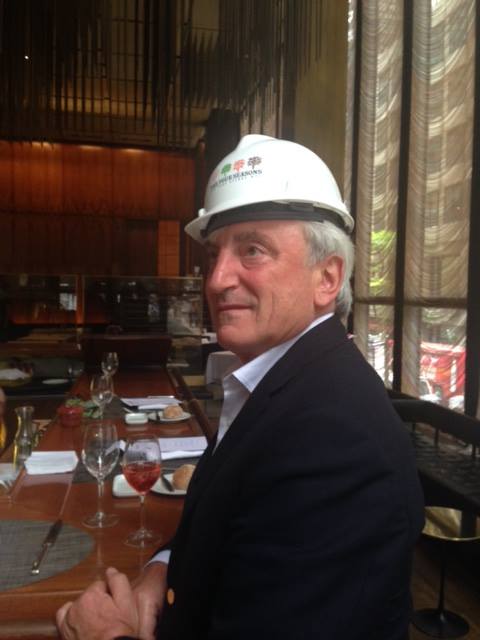
Four Seasons Hardhat
Julian models his Four Seasons hardhat

After enjoying our replacement cocktails, we ordered a lovely lunch: Crisp Shrimp with a stone-fruit mustard and an Ahi Burger with Mango Salsa and fries for me; Artichoke Salad with Burrata and Maryland Crab Cakes (a signature dish) for AAC CPA, all of which we enjoyed very much. 
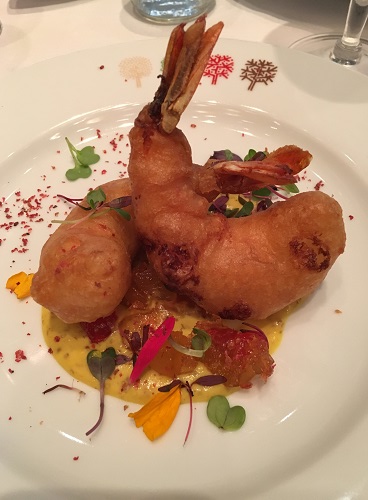
Four Seasons Crisp Shrimp - 2016-07-15
My Crisp Shrimp with mostarda di frutta
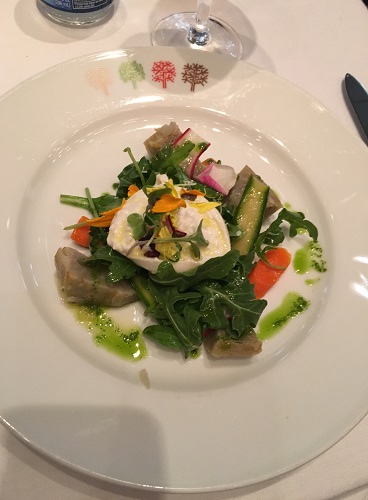
Four Seasons - Artichoke - 2016-07-15
AAC CPA’s Artichoke Salad

Here’s the final Grill Room lunch menu:

Four Seasons Grill MenuAll good things come to an end and we settled our bill, thanked our waiters, and said “au revoir” to Julian. But we had one last thing to do.

We took a final stroll from the Grill Room, down that corridor (now naked and a bit forlorn without “Le Tricorne” on display) and went into the Pool Room. Of course, the first person we ran into was Giuseppe. We thanked him for taking such good care of us over the years, took a last look around and that, as they say, was that.

Four Seasons Pool Room - 2016-07-15
The Pool Room – July 15, 2016

And, so, a great institution is shutting its doors for good. I could bitch about the circumstances that forced the restaurant to close (a multiyear dispute initiated by the owner of the Seagram Building), but that won’t change anything.

If all goes according to plan, a new Four Seasons will open in about 18 months. I have mixed emotions. Nothing can compare with dining in this iconic space. On the other hand, Julian, Alex and their staff have forged many wonderful relationships with their diners over the decades and that’s what will remain.

In the meantime, I’ll just say thanks for the memories.

Four Seasons Alex & Julian
Alex von Bidder and Julian Niccolini, immortalized by The New Yorker.

PS. For better or worse (there are arguments to be made on both sides), all of the non-architectural elements will be sold at a private auction on Tuesday, July 26th at the restaurant. The highest bidders will come away with furniture designed by Philip Johnson and Mies van der Rohe, serving dishes (and more) designed by Ada Louise Huxtable, even the Four Seasons illuminated signs from the entrance will be on the block. A set of four Four Seasons ashtrays (one for each season) is estimated go for between $500-700 or a dozen custom water glasses from $300-500! I’ve already registered (and have an assigned paddle number, if you please) and hope to come away with some memento of our many years at the Four Seasons. Stay tuned and we’ll see what happens.

AUCTION TIP: The Four Seasons Auction
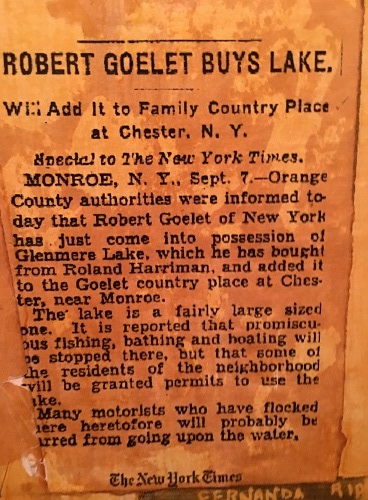
 

Memo from Glenmere Mansion

” . . . . a weekend in the country,
How amusing,
How delightfully droll.
A weekend in the country,
While we’re losing
Our control.”
Stephen Sondheim

Good evening and greetings from Glenmere Mansion in Chester, New York – a mere 75 minutes from Manhattan. This is our 3rd visit to this enchanted hostelry and we couldn’t be happier to be here. The occasion is the 10th anniversary of our very dear friends, A and K, who we met aboard Crystal Serenity on an Atlantic crossing back in 2013.

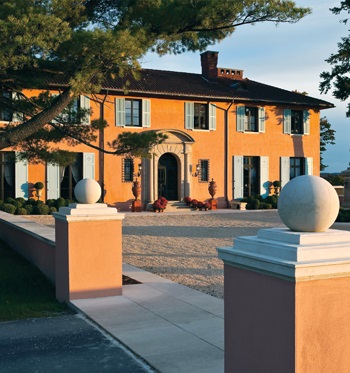
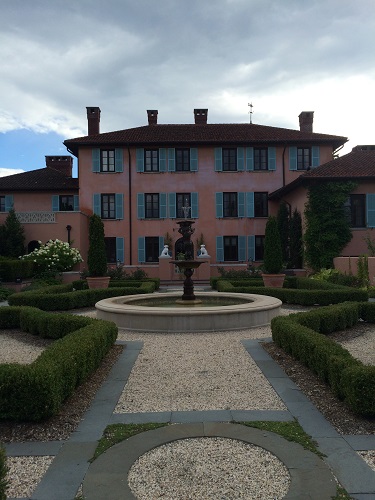
About Glenmere Mansion: Designed by famed architects, Carrère and Hastings, Glenmere was built in 1911 for multimillionaire Robert Wilson Goelet (1881-1966). Goelet’s charge to his architects was to think “Tuscan villa”. The mansion was built on a hilltop overlooking a lake amid hundreds of acres purchased by Goelet. The stunning gardens surrounding the estate were originally designed by Beatrix Jones Farrand, America’s first major female landscape architect.

Glenmere Goelet

Glenmere was sold during World War II and became a resort hotel; over the years, the hotel sadly fell into disrepair and, eventually, was seized by the local authorities and a tax lien was placed upon it. 

In 2007, the mansion and estate was acquired by Alan Stenberg and his partner, Daniel DeSimone, whose inspiration it was to restore Glenmere Mansion to its former glory. It took several years to complete the multimillion dollar project and you can see all that was spent from the moment you arrive. 

In fact, Glenmere Mansion is held in such high esteem that it is a member of the prestigious Relais & Châteaux which, at present, has only 530 properties worldwide.

Glenmere Entrance
Arriving at Glenmere Mansion

Glenmere - AAC Arrives
AAC CPA has arrived

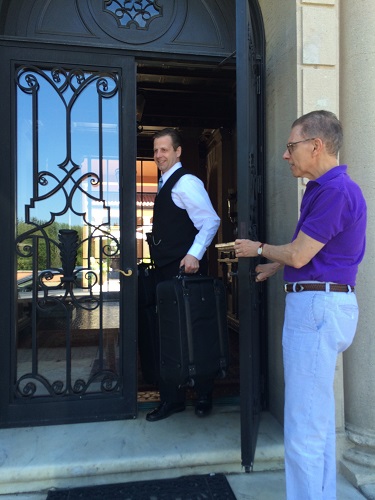
As soon as we drove up, the mansion’s butler, Charles, came right out to meet us. If we didn’t know already know Alan, we’d swear that Charles ran the place – he’s extremely knowledgeable about everything Glenmere, and has the knack of anticipating what you want and/or need, sometimes before you do. He’s that good.

Glenmere - Charles
AAC CPA and the indispensable Charles

While Charles took care of our luggage, we went to check-in. Michelle at reception told us that, thanks to Alan, we’d be upgraded from our usual #16 (there are only about 19 or so rooms in the place) into the Master Suite. (How lucky are we?) Charles got us into the private elevator and we ascended to the top floor and entered our digs for the weekend.

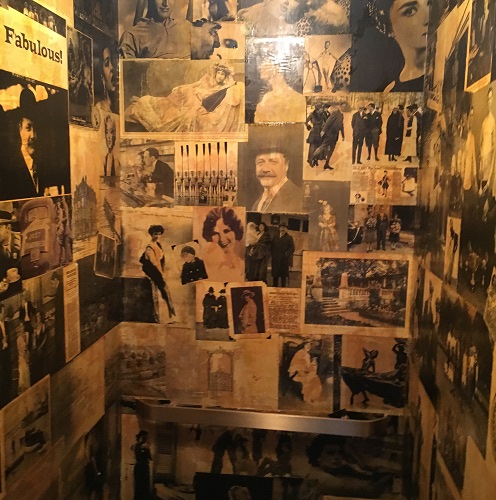
Glenmere Elevator
Private elevator to the Master Suite

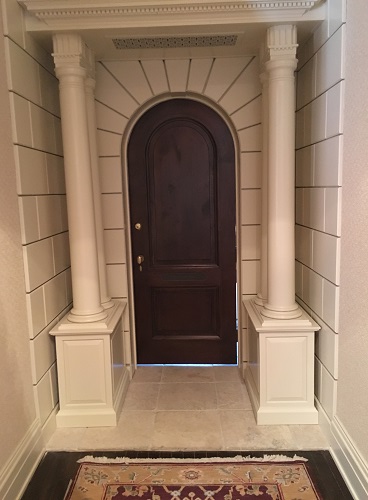
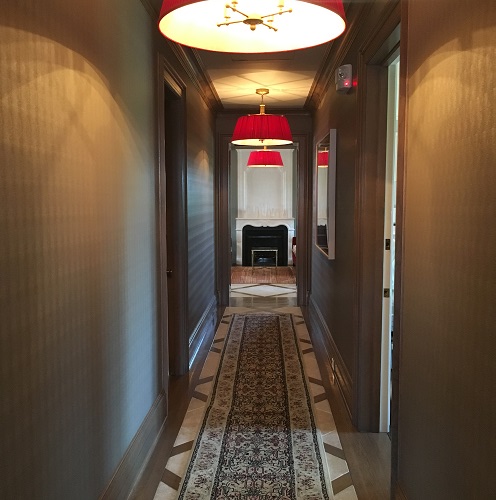
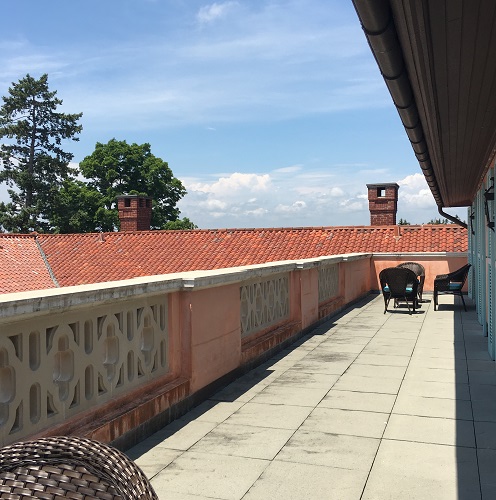
We knew, from past visits, that every inch of this place has been thoroughly and lovingly thought out and impeccably designed, but we were still unprepared for the sumptuousness of the Master Suite. We later realized that the “formal” entrance to the suite is on the floor below, after which you ascend a gorgeous staircase. The suite has a master bedroom with en suite bathroom which features a free-standing bathtub (rubber duckies included), a steam-shower and (even in July) heated floors. Down the hallway is the beautiful living and dining room. Outside the living room is a private terrace, which runs the entire length of the suite. Thank you, Alan, for your generosity!

Manor Suite Entrance
Lower entrance to the Master Suite
Manor Suite Hallway
Master Suite Hallway
Manor Suite Bedroom
Master Suite Bedroom
Glenmere Tub
Bathtub with rubber duckies
Manor Suite Living Room
Master Suite Living/Dining Room
Manor Suite Terrace
Master Suite terrace overlooking the Cortile

After settling in, we met the boys for lunch in the mansion’s Cortile (or inner courtyard). We started with a perfectly chilled bottle of an Italian Rosé, followed by salads and – for one of us with a real appetite – a chicken and waffle sandwich with lots of French fries. Everything was delectable.

Glenmere Cortile
The cortile (or inner courtyard)
Glenmere - waffle
The chicken and waffle sandwich
Glenmere Nicoise
Salade Nicoise

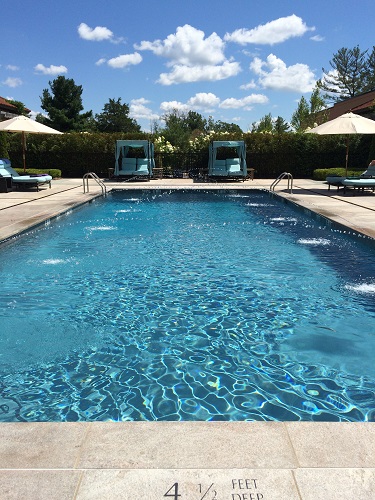
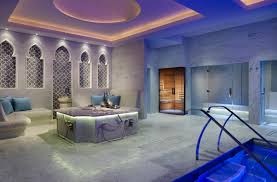
After lunch, it was time for a walk around the grounds. In addition to the gorgeous pool area, there’s a loggia (which was set out with jigsaw puzzles and games), the bocce ball courts, the tennis courts, the croquet lawn (all very Gatsby, don’t you think?) and, finally, the fabulous spa, the main feature of which is one of only four authentic hammam spas in the entire United States. If spas are your thing, Glenmere is where you want to be.

Glenmere Formal Gardens
The formal gardens

Glenmere Pool
The pool
Glenmere Hammam
The fabulous hammam

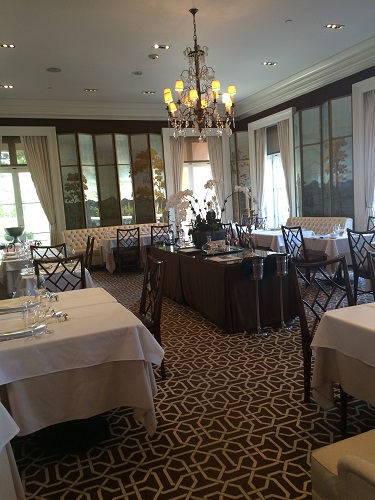
Then we came back inside to snoop around the common areas of the mansion: Frog’s End (the more casual restaurant where we’ll be dining tonight), the library, which has a wonderful collection of books and more games, the “living room”, where cocktails are served each evening, the Supper Room (the more formal restaurant, where we’ll be dining on Saturday night) and, finally, the China Room, which is available for private dinners. The thought and care that has gone into every detail of every room is absolute and complete.

Glenmere Supper Room
The Supper Room

Glenmere Terrace
AAC CPA on the terrace

Before I forget, I want to put in a word for the Glenmere staff. Alan and his partner, Dan, have assembled an outstanding group of local professionals who are here for one reason only: to insure that you have a memorable visit. We remember many of them from past visits and some of them have been here since the mansion opened in 2010.

So now the rain has stopped and we’re going to have another walk around before inviting the boys up for cocktails in a few minutes.

Stay tuned for more details of our Glenmere adventure.

To be continued . . . . . . . 

PS.
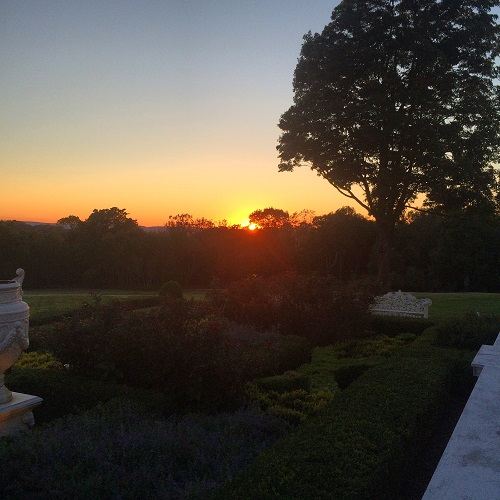
Glenmere Sunset
Another perfect Glenmere sunset


Hotel Yountville

Good morning and greetings from Yountville, where we just finished both our morning constitutional down the main street and a delicious breakfast in the Hotel Yountville restaurant, Hopper Creek Kitchen. If you’re planning a trip to the wine country, and Napa Valley, in particular, I cannot recommend a better place for you to stay than Hotel Yountville for a few days.

Yount AAC
AAC CPA at Hotel Yountville

First of all, Yountville is a town of amazing charm. The population is around 3,000 (give or take), and you couldn’t ask for better weather or a more peaceful community. If you choose to stay at Hotel Yountville, you’re already on the main drag – Washington Street – on which all of the town’s fine restaurants are located: the aforementioned Ad Hoc, Redd, Bottega, Bouchon (not to mention Bouchon Bakery), and the famed French Laundry, all of which are within a 10-minute walk of the hotel. 

Interesting side note: Just across the street from the French Laundry is Thomas Keller’s public garden, in which he grows many of the fruits, vegetables and herbs that he uses in his several local restaurants. It is a working garden and you can go for a stroll and observe the locals tending the garden. It’s very impressive.

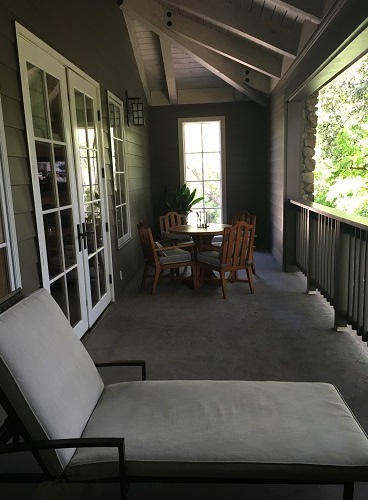
Back to the Hotel: When we stayed here exactly a year ago, we had such a good time that we decided to book it all over again and requested the same accommodation – an elegant 1-bedroom suite with private veranda. I thought you might like to see what it’s like:

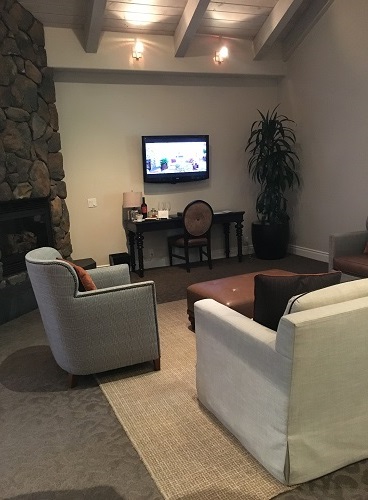
Yount LR
The living room
Yount BR
The bedroom
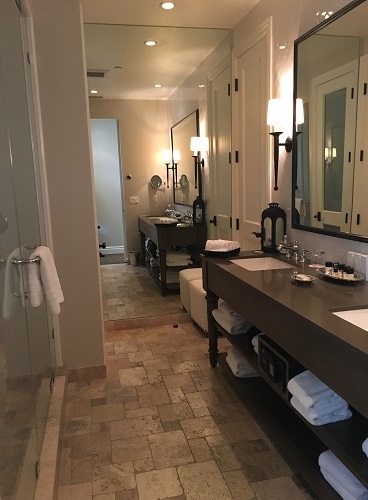
Yount Bath
The bathroom
Yount Tub
Soaking tub located in an alcove off the living room
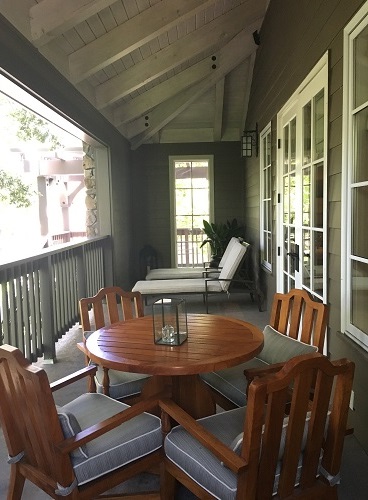
Yount Patio - 01
Private veranda
Yount Patio - 02
Another view of the veranda
Yount Patio View
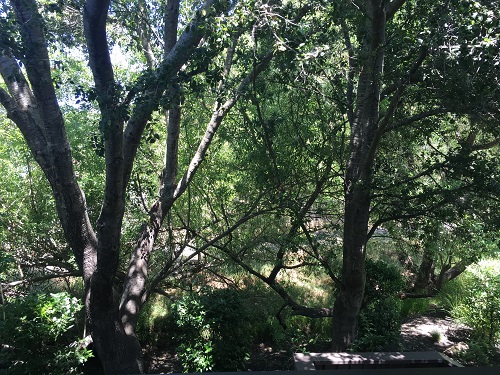
The foliage just outside of the veranda
Yount Swag
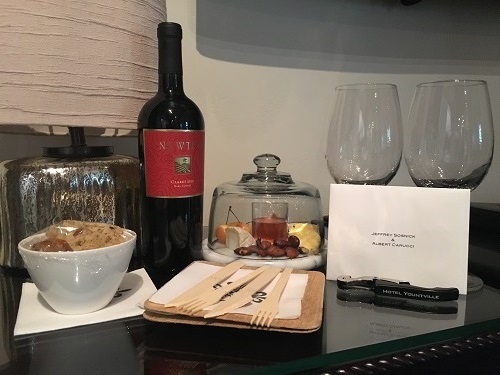
Waiting for us on our arrival

The Hopper Creek Kitchen, open during the day, serves up the best breakfasts of any hotel in our experience.

Check it out:

Hopper Creek Kitchen
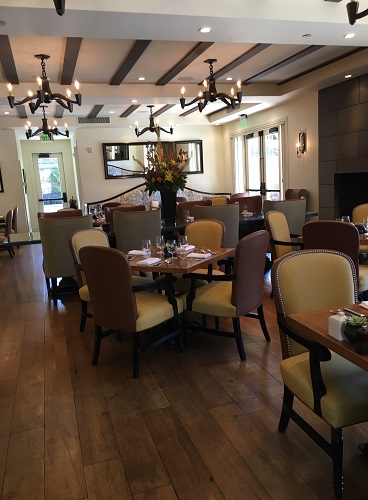
The main room

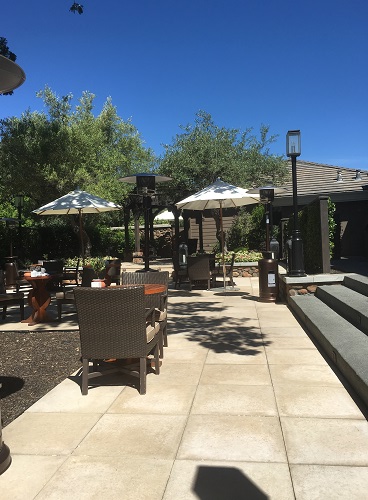
Hopper Creek Patio
The patio at Hopper Creek Kitchen
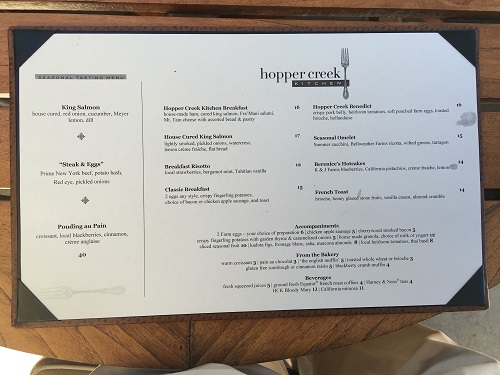
Hopper Creek Menu
The breakfast menu
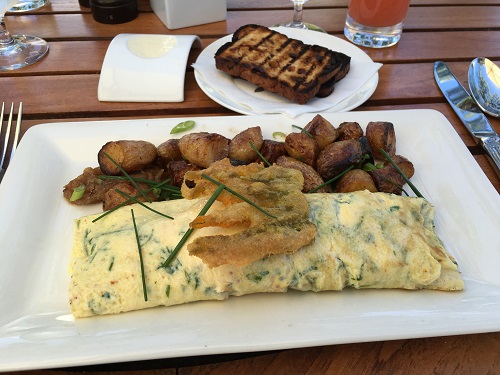
Hopper Creek Omelette
The seasonal omelette with home fries and cinnamon-raisin toast
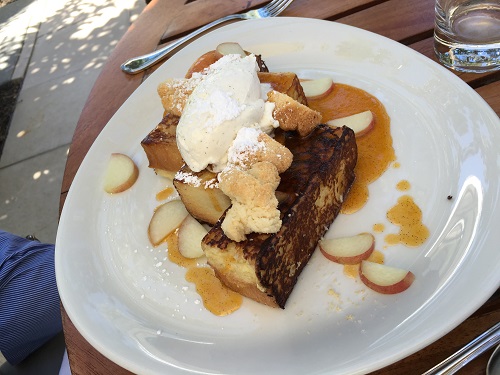
Hopper Creek French Toast
Amazing French toast
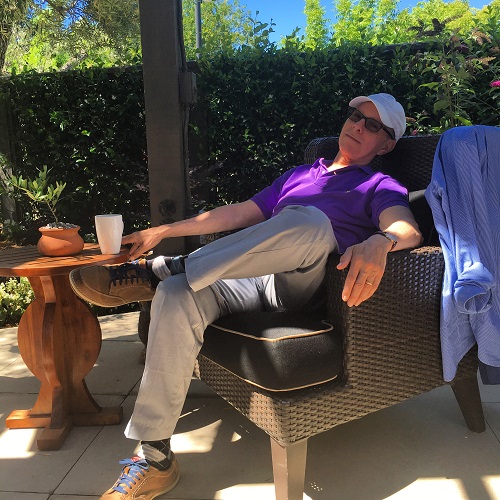
Hopper Creek AAC
AAC CPA in a post-breakfast sugar stupor

The hotel is also outfitted with a spa and swimming pool. There’s a bar located in the main lobby, as well as another bar poolside.

Hotel Yountville is elegant and beautifully appointed, as well as being centrally located in the Napa Valley as you go traipsing from one winery to another for afternoon tastings and/or tours, and is a short walk from some of the best restaurants in the wine country.

TRAVEL TIP: Hotel Yountville

And Then There’s Maude

So, we completed our first full day in town with a splendid dinner at one of the hottest restaurants in town – Curtis Stone’s Maude.

Maude Biz Card.jpg
Maude’s business card

The first thing you need to know about Maude is that – unless you plan extremely well in advance, and are extremely lucky, or are related to Chef – your chances of getting in are going to be very challenging. That’s because the footprint of the restaurant is relatively tiny with less than 10 tables, and the online reservation system only opens up about a month in advance and tends to sell out within hours. In our case, we threw ourselves upon the mercy of Christine (a member of the concierge team at L’Ermitage), and she did us proud. As we’re in town for only 4 days, not only did she get us our desired date but, also, our desired time of 8:00 PM. Thank you, Christine!!

Maude - AAC
AAC CPA arrives at Maude

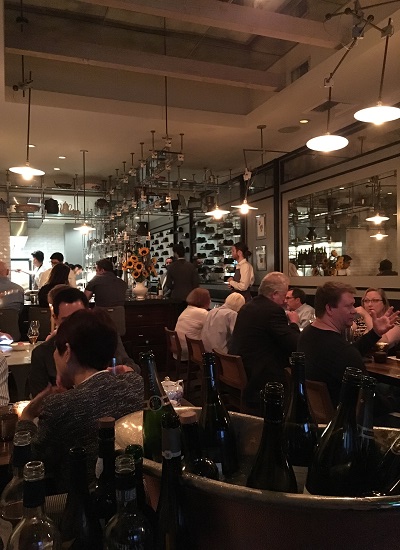
Maude Dining Room
The action in the dining room on a Friday night

Maude serves a multi-course menu which is built around one “star” ingredient and changes monthly. Already this year, Chef has created menus around carrots, potatoes, pistachios, radishes, garlic and, for this month, it’s cherries. Menu prices have been between $125 – $150 per person and are paid in full (plus 18% gratuity) at the time of booking. Beer and wine are offered with dinner and, if you like, you can choose either a “classic” or “reserve” wine pairing at, respectively $115 and $150 per person. Because we are such cheap dates, AAC CPA and I elected to share the premium pairing. It actually worked out great on all counts.

Once you are seated and asked if there are any dietary issues of concern, then the fun begins. The menu is not presented to you until the end of the evening so as not to ruin the element of surprise. Even looking at the menu during the Uber ride back to the hotel, it does not do justice to the experience. The wait staff is excellent and very welcoming and your fellow diners are convivial. Everyone seems happy to be there and to be sharing the experience.

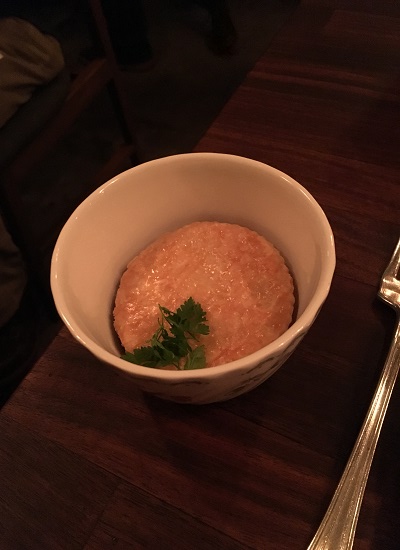
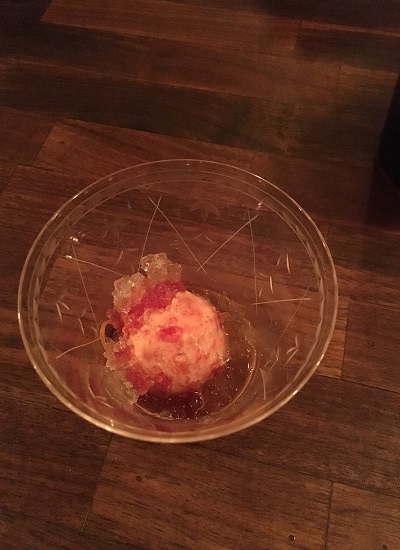
I would have liked to say that I can faithfully recollect everything we ate, but that would be a bald-faced lie. I did take a lot of pictures of the various courses, which I’m happy to share with you, but I don’t recall now all the preparations and ingredients, but I’ll do my best. Mega apologies to Chef and his team. At the very least, you can enjoy seeing the food and the presentation.

Maude Cherries & Fois Gras
Cherries and fois gras sitting on a light cracker

Maude Jicama
Jicama, lovage, elderflowers, cherries

Maude Omasum
Omasum (a/k/a tripe), porcini, anise, cherries 

(NOTE: So glad we didn’t know what we eating before we ate it – suffice it to say that each bite was a singular sensation.)

Maude Marcona Almond Soup
Marcona almond soup with cherries

Maude Sturgeon
Sturgeon, which was somehow smoky, in a cherry glaze

Maude Abalone
Abalone with beans, miso and basil and, of course, cherries 

Maude Squab
Squab with beets, nasturtium and poached cherries

Maude Parfait
Served with the squab, puff pastry atop something really good!!

Maude Clafoutis
Following the cheese course, clafoutis with cherries

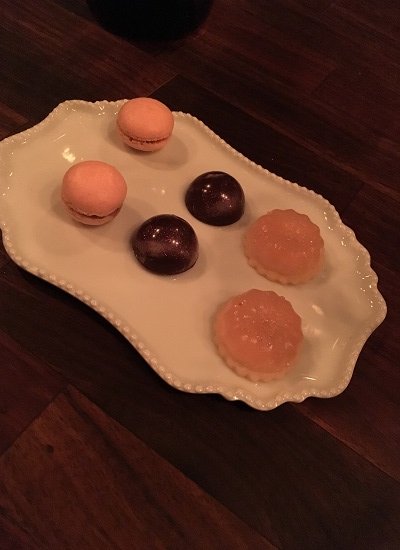
Maude Petit Fours
Followed by petits four

Maude Scones
Still hungry? Cherry scones to take with us.

One of the best parts of the experience is that, although we ate something like 10 courses (I forgot to include pix of the pasta and cheese courses), by the end of the almost 3-hour meal, we were comfortable and entirely satisfied. The progression and size of each course wasn’t excessive but was entirely sufficient. It’s my favorite kind of dining experience: you get to try a lot of things and not feel as if you have to be carried from the table.

So, if you’re planning to be in Los Angeles – or if you live here – check out Maude and try your luck at scoring a reservation. For most of us, you’ll be saving it for a special experience, but you’ll have a very memorable evening.

CULINARY TIP: Maude

Los Angeles – 1st Full Day in Town

Greetings, gentle readers, from the City of Angels. We arrived yesterday afternoon and, so far, are having a wonderful time.

Our trip in from the airport yesterday afternoon was uneventful, except that one can no longer travel on the freeway, as they have all turned into parking lots. But we know how to get around and where all the shortcuts are. Of course, so did our taxi driver, so all was well.

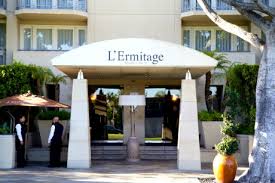
We’ve stayed at L’Ermitage annually, probably going back at least 10 – 12 years. It’s always a pleasure to return here, almost like our southern California home: perfect location, comfortable surroundings, great staff.

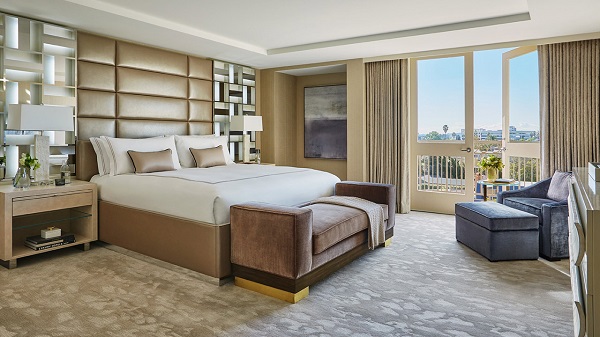
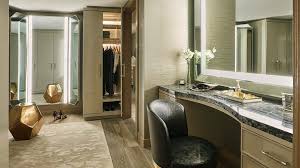
The hotel had a major renovation last year so, after we settled in, we went snooping around. Almost every element of the hotel has been rethought. The guest rooms have been totally redone from scratch and are both practical and gorgeous.

Here are a few pix of our room:

L'Ermitage Room
Our bedroom and sitting area

L'Ermitage Dressing Room
The dressing room and closet area
L'Ermitage Bathroom
The bathroom

Yes, we’re very comfortable here.

Downstairs, there’s a new restaurant, Avec Nous, where we take our breakfasts which, thanks to the AmEx FHR program, are included (or, at least, we get a $60 per day credit). Thanks, AmEx! Thanks, Veronica!!

Avec Nous
Avec Nous, L’Ermitage’s new restaurant

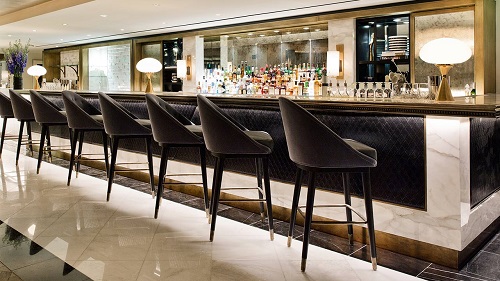
Avec Nous Bar
The fancy bar at Avec Nous

We’re also very fond of the rooftop pool and cabanas at the hotel. It’s usually pretty quiet and they’ve installed a bar adjacent to the pool so, should you become thirsty, you’ll find instant gratification. Also, there’s a food menu, should you feel peckish. 

L'Ermitage Rooftop Pool
L’Ermitage’s rooftop pool and cabanas at sunset – nice, right?

Anyhoo, after we finished our tour of the new and improved L’Ermitage, it was time to settle down for awhile, a/k/a passing out for an hour or so. It had been a long day and we were looking forward to our first dinner in LA.

Following a refreshing nap, we were ready to clean up and head out. Thanks to the amazing concierge team at the hotel, we were taken in the hotel town car to Sotto, over on West Pico. This place does some serious southern Italian food. It’s located in a so-so area and it’s underneath something else, so it’s not unlike eating in someone’s ground level apartment, only much better.

Sotto - AAC
AAC CPA arrives at Sotto

We were cordially welcomed and escorted to our table. Our waiter, Angela, took incredibly good care of us. Because I’d checked it out beforehand, we knew that we wanted to start with the Chickpea Panella, sort of mashed-up chickpeas and then deep-fried and topped with shavings of pecorino cheese. It was the perfect compliment to the icy cold Negronis we had requested.

Following, we had a 1st course of charred broccolini and spicy pork meatballs which was served over a salad of mixed greens and salata ricotta.

Charred Broccolini
Charred broccolini
Sotto - Pork Meatballs
Spicy pork meatballs

We then decided to share a primi, in this case a delicious paccheri (a tube pasta) in a sweet and spicy pork ragu with rapini and – get this – fennel pollen. The pasta was perfectly al dente, and the flavors were intense.

About this time, we started in on a glass of the most ruby red Montalpulciano, which was a perfect compliment to the pasta and the next course: the guanciale pizza, made with house-cured pork cheek and ricotta and cooked to perfection in Sotto’s wood-burning oven.

Sotto - Pizza
Guanciale Pizza

We had hoped to save room for some made-at-the-last-minute cannoli, but we just couldn’t – you know what I mean. So, our wonderful waiter, Angela, brought us a little box, which was filled with complimentary cannoli, for a late-night snack. How great is that?

Remember how I said that we opted not to rent a car for the first time ever in LA? Yes, friends, we decided to go all 21st century and just Uber our way around town. And it worked pretty darn well, although we almost got into the wrong Uber at the restaurant, which was waiting for someone else. It all worked out in the end however, and we returned to L’Ermitage and literally fell into bed. It had been one long day.

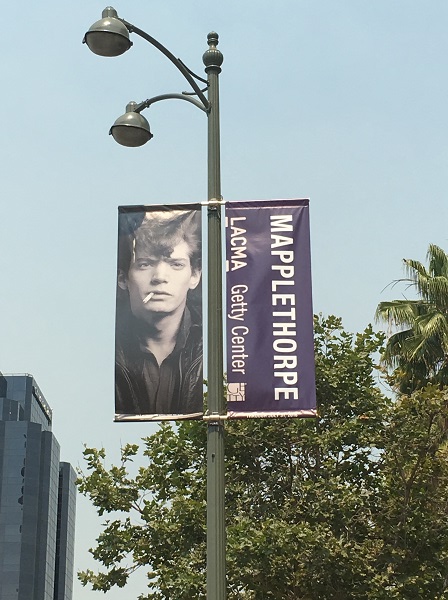
This morning, we were up at a reasonable hour, made ourselves presentable, went down to breakfast and, once again, hopped into the hotel town car, this time bound for LACMA (the Los Angeles County Museum of Art) to see a special exhibition: Robert Mapplethorpe: The Perfect Medium. For those of you too young to remember (and you know who you are), Mapplethorpe was an extremely talented and even more extremely controversial artist in the 1970’s and 80’s. Even after he died of AIDS in the late 1980’s, controversy raged around him. If you don’t believe me, just google Jesse Helms and Robert Mapplethorpe and see what pops up. It’s utterly fascinating.

LACMA
Banners proclaiming the Mapplethorpe exhibit at LACMA
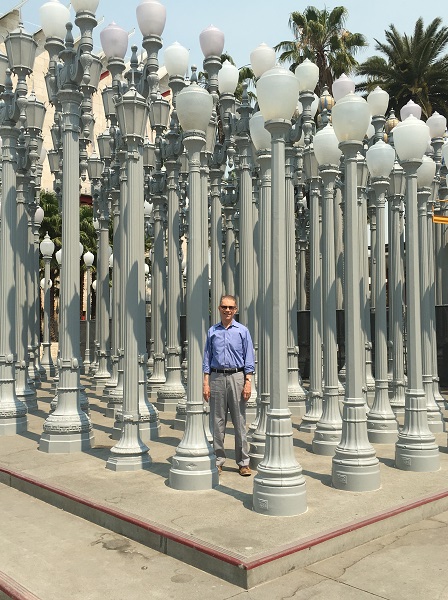
LACMA - AAC
AAC CPA goes to LACMA and checks out the street lamp exhibit

The Mapplethorpe exhibition is at LACMA through July 31st, and we’d highly recommend it. PS. It’s not for the young ones.

CULTURE TIP: Robert Mapplethorpe: The Perfect Medium

By coincidence, HBO has been broadcasting a documentary about Mapplethorpe, entitled “Mapplethorpe: Look at the Pictures”, which I encourage you to check out. It’s not for the faint of heart, but it’s extremely rewarding.

CULTURE TIP: Maplethorpe: Look at the Pictures

After all that culture, we were ready for some lowdown activities, so we got ourselves over to The Grove, most particularly so that we could drop into See’s Candies, which is an obsession of ours’. If you’re never sampled See’s, you’re really missing out. It’s like an old-fashioned candy shoppe, and the first thing that happens when you walk in is that they give you a free sample which, as they say, gets the juices flowing. We walked out with over 2 pounds of the stuff.

Although See’s is based throughout California, it’s also available online. If you’re a chocoholic, please check it out, but don’t say I didn’t warn you: this stuff is ADDICTIVE!

FUN TIP: See’s Candies

Then it was time to Uber back to the hotel, change into casual attire, and hit the roof deck pool and cabana. There was an available cabana in the shade, so we snuggled in, ordered a turkey panini, and now we’re just lazing about as I write this blog entry to you.

AAC - Cabana
AAC CPA devours the New York Times from his rooftop cabana

Tonight we’re having a very special culinary experience at Maude. I’ll close for now, but report back to you very soon all about it – it’s going to be the cherries, I’m sure.


California, Here I Come!

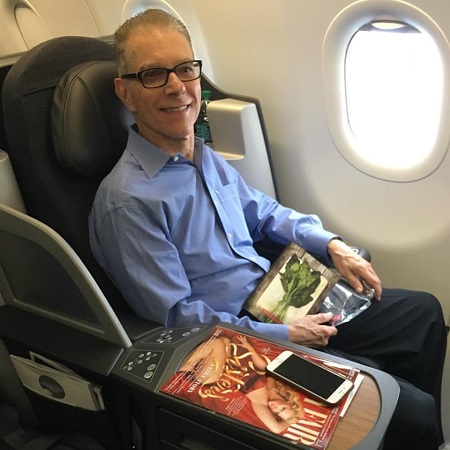
Yes, fellow travelers, it’s time to hit the road again. After a 2½ hour delay on the ground, AAC CPA and I are midway between the right and left coasts, winging our way via American Airlines to sunny Los Angeles.

There was no real explanation about why we were so delayed at JFK this morning. There was, apparently, a huge buildup of planes that were unable to take off. Yes, it was raining, just a bit, but is that any excuse? Geez, Louise.

AAC
AAC CPA settles into AA #1 bound for Los Angeles

So, we finally took off, libations were served (Bloody Mary’s, Tito’s on the side, please) which, for some inexplicable reason, were accompanied by biscotti. Where are my warm nuts??

Then there was a bruschetta omelet, accompanied by sausage, fresh melon and a biscuit. I was hungry, and it was tasty (enough).

Now I want to tell you about our itinerary for the next 11 days. We’ll be in Los Angeles – a much maligned town, if you ask me – for the next 4 days. Then we’re flying up to San Francisco and motoring to the wine country – Yountville (in the Napa valley), to be precise. After a few days in that paradise, we’re spending a long weekend in San Francisco. We’ve made this trip many times – it’s our annual west coast swing – and we couldn’t enjoy it more.

So what will we do for fun? There will certainly be a lot of eating; in fact, our dance card is filled every night with some very interesting dining establishments. I’ll tell you about them as we go along, but I’ll give you a little preview of our dinner tomorrow night:

We’re going to a place called Maude (“and then there’s Maude!”), which is this very hot restaurant in Beverly Hills. Helmed by chef Curtis Stone (“Top Chef” and “Around the World in 80 Plates”), the restaurant features a set multi-course menu that changes monthly. Each menu features one “star” ingredient: for June, it’s cherries. From what I’ve heard, we’re going to have a pretty fine experience.

Curtis Stone
Curtis Stone

DINING TIP: Maude

There will also be some culture on this trip. For instance, tomorrow morning, we’re going to LACMA (the Los Angeles County Museum of Art) to see one of two Mapplethorpe exhibitions which are currently on view in the Los Angeles area. (The other is at the Getty.) As Mapplethorpe’s art was somewhat divided into two camps – as I imagine the exhibitions will likewise be – it’ll be interesting to find out which one we’re going to get. Stay tuned.

Mapplethorpe-01
Mapplethorpe by Mapplethorpe

CULTURE TIP: Mapplethorpe at LACMA

We’ll be staying at our favorite local hotel, L’Ermitage, located on Burton Way in Beverly Hills – just a few short blocks from Rodeo Drive, in fact. When we were last there – almost exactly a year ago – the place was in the midst of a major renovation, which was completed some months ago. At that time, we were shown a model of the new guest rooms, and the hotel has stepped up its game in providing a luxe experience for its lodgers.

L'Ermitage

TRAVEL TIP: L’Ermitage

We’ve also made a pretty dramatic decision regarding our LA sojourn: for the 1st time ever, we’re not renting a car but, rather “Ubering” our way around town. We’ve had friends who say it’s the only way to go. Between car rental fees, valet parking and hotel parking charges, this has got to be a good deal, right?

So that’s our little trip in a nutshell. Now it’s time to watch a flick, so I’ll stop here. I’ll be back soon with reports on our travels. Keep an eye on this space and have a lovely day.

A Week in the (Cultural) Life – Part Two: Not Your Parent’s Figaro

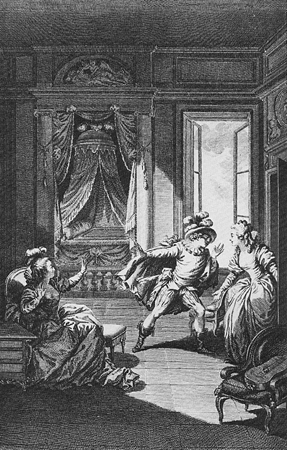
In 1784, La Folle journée, ou le Mariage de Figaro (The Crazy Day, or The Marriage of Figaro), Pierre-Augustin Caron de Beaumarchais’s sequel to his hugely success The Barber of Seville had its delayed premiere at the Comédie-Francąise – delayed as the author had written the play from 1775-78, but the Parisian censors wouldn’t allow the play to be produced until then.

Remember that these were the years leading up to the French Revolution, and a play in which the main themes are social inequality and outright contempt for the nobility and, not least, portraying the servant class as more humane than and able to outwit the aristocracy, made for a very dangerous evening at the theatre.

Figaro - 01
Print from early production of the Beaumarchais play
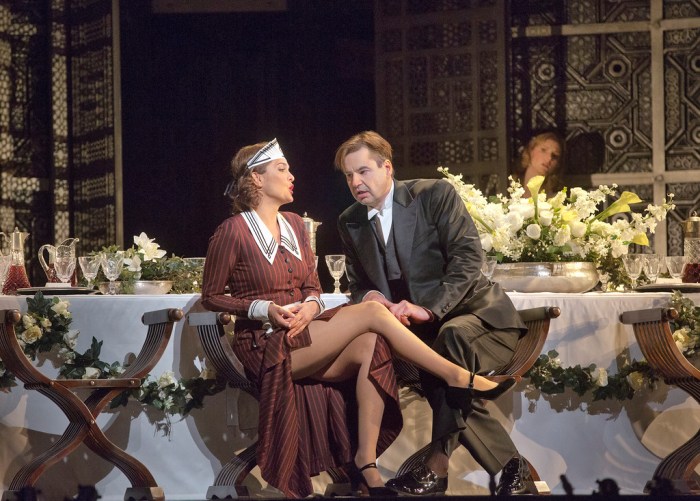
A scant two years later, Lorenzo Da Ponte reworked the play into arguably Wolfgang Amadeus Mozart’s operatic masterpiece, Le Nozze di Figaro. As is always the case when translating a play into an opera, Da Ponte brilliantly condensed Beaumarchais’s provocative play into tight narrative and, in doing so, deleted most of the politics and revolutionary ideas. What remained was a work of art from which future generations of operagoers could enjoy a “light” entertainment about how the servant outwits his master and all is forgiven at the end of the evening.

Figaro - MET - 01
From the Met’s current production of the opera, as seen in the 2014-15 season
(It should be pointed out that Da Ponte’s libretto was totally at the liberty of the Viennese censors, who demanded that he delete or play down the more controversial aspects of the play so that Mozart’s sponsor and patron, the Emperor Joseph II, could not possibly be offended.)

What’s interesting is that, when it came time to present the opera in Paris (in 1792), the French Revolution was at its height. As a result, it was decided to reinstate the more controversial aspects of the original source material. As Mozart was now dead, revising the opera was out of the question. Instead, Beaumarchais was brought in to decide which parts of his play were to be included. In order for the opera to have a manageable length, Mozart’s and Da Ponte’s recitatives were excised and, in their place, Beaumarchais inserted dialogue from the play.

Mozart’s charming opera would now become a highly-charged political amalgam of the play and the opera. Let them eat cake, indeed.

It cannot be denied that Beaumarchais’s play was a pungent satire with a striking political edge, and that Mozart’s opera downplayed the more controversial elements while retaining its punch for those who were able to see past the charm elements. However and, perhaps, most significantly, both the play and the opera conclude with the Countess generously forgiving the Count his transgressions and the evening ends on a hopeful note of reconciliation.

It’s probably difficult – if not downright impossible – for 21st century audiences to appreciate what it might have been like to attend the earliest productions of the play and opera. The aristocracy was probably outraged and not a little bit nervous over what they were seeing, while the general population may have felt validated to see people like them standing up for themselves and daring to talk back to their masters.

Interestingly, modern audiences now have the opportunity to encounter an updated version of the story: ¡Figaro! (90210), Vin Guerrerio’s uproarious “revisal” of the Beaumarchais/Mozart/Da Ponte source material. Originally presented under the auspices of LA Opera Off Grand, you have until Saturday, April 3rd to see this witty and extremely relevant iteration at The Duke on 42nd Street in New York City.
Figaro 90210 - 01

Set in modern day Beverly Hills, Figaro and his intended, Susannah, are now undocumented illegals; the Count and his Countess are now Paul Conti, a somewhat shady real estate developer and his Botox-ed actress wife, Roxanne. The Count’s page, Cherubino, is now the aspiring hip-hop artist, Li’l B-Man. You get the idea.

Figaro 90210 - 03

Mr. Guerrerio’s brilliant and cleverly reimagined libretto is performed in English and “Spanglish”. Most importantly, it once again makes the story relevant, but in a highly entertaining way. Indeed, this is not your parent’s Figaro.

So, within the space of 3 days, we saw a hugely entertaining production of Puccini’s Tosca at a former bus terminal in the Bushwick section of Brooklyn and, now, a “ripped from the headlines” and highly relevant production of ¡Figaro! (90210).
Opera is very much alive and thriving in New York.

CULTURE TIP: ¡Figaro! (90210)


A Week in the (Cultural) Life – Part One

Greetings and Salutations! Yes, we’ve been away for a few weeks, but now we come roaring back. I hope everyone made it through the winter and is enjoying some milder weather and the expectation of warmer things to come.
We’ve been very busy ourselves, although we haven’t been out of the city since our return from Antarctica and Buenos Aires. The cultural scene has been extremely busy and will continue for the next month or so.

I thought you might be interested to know what we’ve been up to over the past week. It’s been all culture and eclectic culture at that. The accent has been mostly on opera. However, it hasn’t been your mom and pop’s opera, as you will soon see.

Last Saturday night, we returned to Brooklyn to attend LoftOpera’s first production of the year, Puccini’s Tosca. You may recall that, this past December, we visited LoftOpera for the 1st time to see their production of The Rape of Lucretia and were pretty much blown away by the audacity of the experience.

In the first place, LoftOpera has made a commitment to take the “elite” out of opera, without sacrificing what’s important: great works being performed by talented up and coming singers in unusual surroundings at affordable prices and with a real party vibe.

Tosca - AAC
AAC CPA arrives with the ArcAngel Michael over his shoulder

Did I mention that the audience is mostly comprised of youngsters (i.e., the under 30-crowd) looking for a great night on the town?

Or that, one of LoftOpera’s sponsors is the Brooklyn Brewery, so that beer is available throughout the performance? (One of the more piquant enjoyments of this Tosca performance was to hear the tinkling of beer bottles tipping over now and then and yet again.)

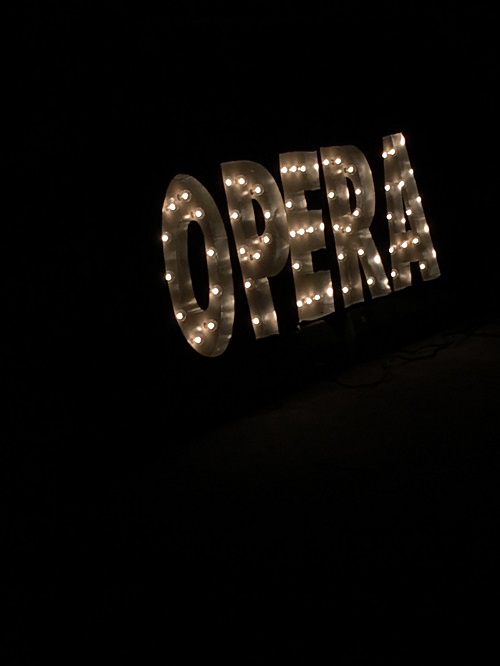
Oh, and did I mention that Tosca was presented in an old bus depot in the Bushwick section of Brooklyn in so isolated a part of town that even Uber had a hard time finding the place?

Tosca - Opera Sign
How we found the bus depot – this sign in the darkness

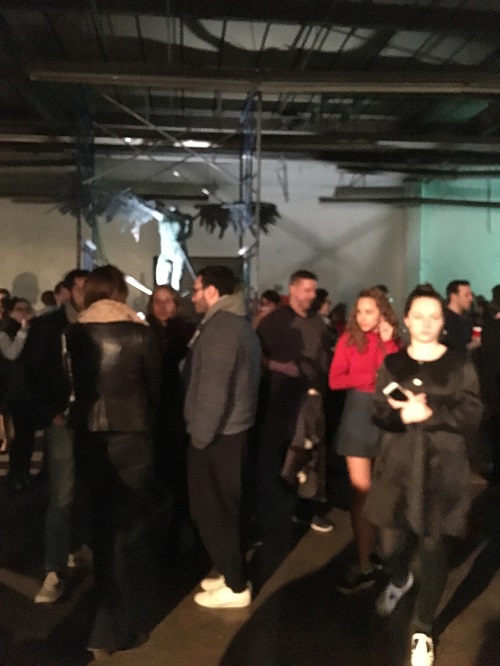
Or that, during intermission, the beer continues to flow freely while house music blasts over the speakers?

Tosca - Audience
The cool and young audience enjoying culture and the party atmosphere

Or that, most importantly, this Tosca was the best production of Puccini’s “shabby little shocker” on the opera scene in New York (and I include a certain production of the work in the repertoire of a certain opera company located at Lincoln Center).

Oh yeah, and tickets are $30. Yes, you read that right: $30 will get you an opera.

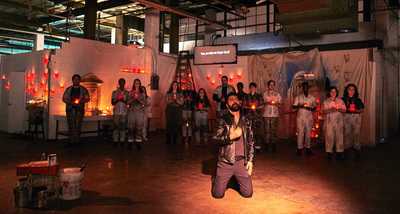
Backed by a 32-piece orchestra and energetically conducted by Dean Buck, this Tosca took flight. The cast, headed by Eleni Calenos in the title role (diminutive in appearance, but packing a huge soprano voice well versed in the verismo style), James Chamberlain (our Cavaradossi with his beautiful upper register and thrilling high notes) and Kevin Wetzel (the perverse – and I mean that in a good way – Baron Scarpia) put it all out there at what was the closing performance of the run.

Tosca - 01
Cavaradossi and Tosca, Act I

Tosca - 01a
Baron Scarpia – Act I (Te Deum)

Tosca - 02
Tosca takes matters into her own (bloody) hands

Tosca - 03
Tosca and Cavaradossi – Act III

Tosca - 04
Spoiler Alert: It ends badly for everyone

And I have to give a shout-out to Jordan Pitts as Scarpia’s head henchman, Spoletta (and one of the creepiest and most threatening Spolettas I’ve ever witnessed – you wouldn’t want to run into this guy late at night in Bushwick!). Normally a comprimario role that disappears into the scenery, this Spoletta was a junior Scarpia in training.

Although the performance was sold out with over 500 people attending, the performance space allowed for an intimacy between the characters and the audience that would be impossible at almost any other venue. I’m not kidding when I tell you that there were times that the singers were literally within 2 feet of where we were sitting. And, in fact, the performance was SO sold out that there were about a dozen people sitting on the floor in front of what would be the first row.

(In fact, the company’s executive producer (and set designer for this performance), Daniel Ellis-Ferris, was sitting directly in front of us (on the floor) as he synchronized the projected titles onto a screen over the set.)

Tosca - Titles
How the titles work (Thanks, Dan!)

The production was imaginatively staged and authentic to the creators’ opus, notwithstanding a number of anachronisms that were both witty and yet, somehow, appropriate (although I doubt that Spoletta would have received the news of Napoleon’s victory at Marengo via his cellphone).

Bottom line: kudos to Dan and Brianna (LoftOpera’s general manager), the cast and all involved with this very successful production of Tosca.

NY Times on LoftOpera’s Tosca

Next up for LoftOpera: Rossini’s Le Comte Ory in June. Stay tuned or, better yet, order your tickets as soon as they go on sale!

CULTURE TIP: LoftOpera

A Romantic Atmosphere

Whenever the great 1960s musicals (a/k/a the last gasp of the “Golden Age of Broadway”) are written about, the list is invariably topped by such shows as the leading lady musicals (Hello, Dolly!, Mame, Funny Girl), the groundbreaking shows (Cabaret, Hair), the satiric and/or subversive shows (Bye, Bye Birdie, How to Succeed), the unlikely blockbuster (Fiddler on the Roof).

What’s often missing from these lists is one of my favorite shows that is too easily dismissed: the Jerry Bock/Sheldon Harnick/Joe Masteroff 1963 musical She Loves Me.

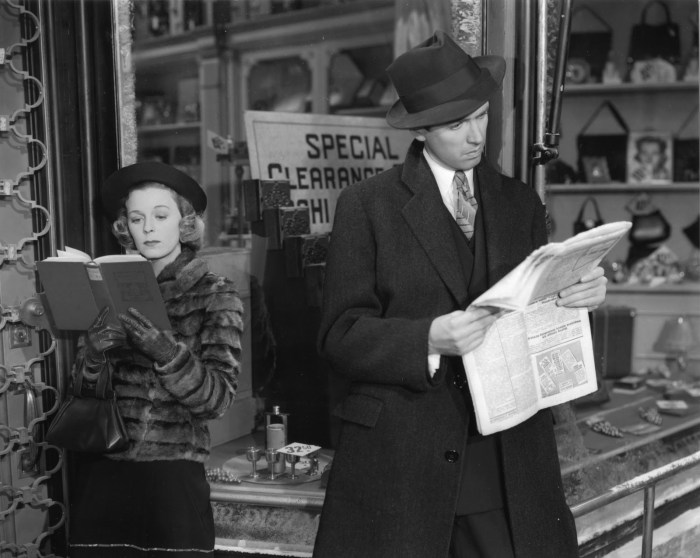
Based on the 1936 Hungarian play Parfumerie by Milklos Laszlo, you may know the source material better from its 3 film adaptations: Ernst Lublisch’s sublime 1940 film, The Shop Around the Corner, starring a perfectly cast James Stewart and Margaret Sullavan, MGM’s musical remake for Judy Garland and Van Johnson, In the Good Old Summertime and, in 1998, Nora Ephron’s re-remake You’ve Got Mail, starring Tom Hanks and Meg Ryan.

Shop Around Poster

Shop Around - Sullivan Stewart
Margaret Sullavan and James Stewart – note the body language

She Loves Me has had 2 major Broadway productions (the original and a revival in 1993), neither of which returned its original investment. Having said that, not every work of art can be judged a failure or success solely on the merits of its box office receipts. Had that been the case, Follies never would have been revived, even though no production (and there have been many of them) of that masterpiece has ever turned a profit.

She Loves Me - 1963 - Playbill
Playbill from the original 1963 production

She Loves Me - 1963 - Cook & Massey
Barbara Cook and Daniel Massey in a tense moment from the original production

She Loves Me - 1963 - Cassidy & Baxley
Jack Cassidy and Barbara Baxley in the original production

As I write this post, a new Broadway production of She Loves Me has just begun previews at Studio 54 and has set March 17th at its opening night. AAC CPA and I were there last week for the 1st preview and by the time you have finished reading this post, I hope you will have already ordered your tickets.

She Loves Me - 2016 - Playbill

CULTURE TIP: She Loves Me at Studio 54

So, what is it about this story that so captures our fancy and has certainly withstood the test of time, considering its many iterations over the past 80 years? And, in particular, what is it about She Loves Me that casts a spell over its audiences and completely captivates us to such an extent that it is difficult to remove the smile from your face well after you’ve left the theatre?

As with everything, let’s start with the story.

Here comes the BIG SPOILER ALERT, which is revealed within the first 30 minutes of the show: the leading man (Georg, originally played by Daniel Massey) and lady (Amalia, originally played by Barbara Cook) work in a “parfumerie” – a place which no longer exists – where perfume was sold and/or made. Being on the cusp of middle age and still single, they have each entered into a correspondence relationship with someone they believe to be their possible soulmates. Unbeknownst to each of them, they are writing to each other. And, oh yes, at work they cannot stand the sight of each other.

So maybe the plot might seem like boy and girl meet cute, complications ensue, but it all works out in the end – in other words, a formula story with a denouement we all saw coming as soon as were in on the gimmick.

But that’s not what’s going on here. In the finest of the Parfumerie adaptations – and I consider The Shop Around the Corner to be every bit as good as She Loves Me – the story becomes elevated by the material that was written by, respectively, Samuel Raphelson and Ben Hecht for the movie, and by Masteroff, Bock and Harnick for the musical. Put quite simply, the material for both the film and musical is just about perfect on all counts.

Joe Masteroff wrote the books for 2 musicals in the 1960s: She Loves Me and, three years later, Cabaret. Whereas the book for Cabaret is a hard-edged, cynical Brechtian orgy, She Loves Me is its complete opposite: witty, genuinely funny and completely romantic. More importantly, Masteroff has created an ensemble of 7 leading players, each of whom is completely human and completely recognizable to the audience. Simply put, we know these people.

Best of all, while the show is in no way sentimental, the show has great sentiment. By that, I mean that the story plays on to its inevitable conclusion but is in no way sappy or sugar-sweet. Whenever the situation threatens to crossover towards a false note of saccharine, our writers come to the rescue with a quip, a witty lyric or a surprise. In this way, it is almost anti-musical in its intentions and its presentation.

That is, except for its exceptional book and score.

It is at this point that we give a tip-of-the-hat to Mr. Bock and Mr. Harnick. They created, perhaps, their most harmonious, humorous and romantic score. There was so much of it, in fact, that the original cast album ran to 2 discs.

The amazing thing about this score is how, from the very opening number, it draws you in, not only to the story but, more importantly, to the inner lives of the characters. Masteroff’s book gives each character his or her special moment when they take center stage and shine. Because She Loves Me exists in musical comedy land, these moments are almost always musicalized. What’s most striking to me is the imagination inherent in the score: the moments that Bock and Harnick choose to musicalize are, in many cases, so surprising. Right at the top of the evening you have “Sounds While Selling” – a double trio of sorts in which customers are being waited upon by their salesmen in overlapping dialogue. Or our leading lady’s first number “No More Candy”, in which she “auditions” for a job at the parfumerie. Or Sipos’ “Perspective”, in which this nerdy clerk explains how not to lose your job and tells you exactly who this Sipos person is.

I thought you might enjoy Amalia’s “audition” scene in the movie and compare it to the musical moment in the play. In the first clip, Margaret Sullavan makes a sale and, in the second clip, Barbara Cook musicalizes the same scene.

The Shop Around the Corner

No More Candy, sung by Barbara Cook

The “second” couple – Ilona and Steven Kodaly (originally played by  Barbara Baxley and Jack Cassidy) get their due as well. In each act, they have back-to-back numbers that, in the first act, totally inform their characters and, in the second, resolve their stories. These numbers are comic but also real. And, in the current revival, one of these numbers – “Ilona” – has an interpolated dance break because Mr. Kodaly and his Ilona are played by the supremely talented Gavin Creel and Jane Krakowski, both of whom know a little something about “la danse”.

Our leading couple has ample opportunity to show the various colors of their personalities. When – finally! – the pen pals agree to meet, but still don’t know their real identities, Georg’s “Tonight at Eight” displays the manic combination of fear and joy that an almost blind date inspires. Amalia’s “Will He Like Me?” takes a more touching and introspective look at a woman alone and contemplating what may be her last chance for happiness.

Later, in the second act, they have back-to-back numbers. The ice has now begun to thaw for our lovebirds (he’s figured “it” out, but she doesn’t yet know) and first she, in the showstopping “Ice Cream” and then he, in the show’s title song, invite the audience to share in their newfound joy and surprise. (Notice how, in each song, both Amalia and Georg sing “Will wonders never cease?”)

It’s heady stuff.

And, by the way, let me just mention that the leading lady for this revival of She Loves Me is none other than Laura Benanti. She is one of those performers who, in the old days, Cole, Irving, Alan and Fritz, and Oscar and Dick would be fighting over to cast in their next show. It is a real treat to see Ms. Benanti onstage in a role that fits her like a glove that she might have purchased down the street from that parfumerie.

She Loves Me - 2016 - Cast
Laura Benanti, Zachary Levi, Cavin Creel and Jane Krakowski, now onstage at Studio 54

But mostly, what’s so deeply moving and entertaining about this show is that, for the entire evening, you are confronted by real people going through their lives in full view of the audience. While She Loves Me might be considered light entertainment, the show is played not for laughs but for real (which, by the way, makes the show riotously funny).

I know that there are many more exciting shows on Broadway just now (Hamilton, anyone?).

But in the final analysis, She Loves Me is both a charmed show and a show with great charm. It’s the type of show that is no longer being written and, quite frankly, may never be written again.

She Loves Me is now playing at Studio 54; performances are currently scheduled through Sunday, June 12th.

TBT: Kyoto and the Hoshinoya

Greetings and salutations!

I know that lots of peeps celebrate TBT on Thursdays, but I say why not Throwback Tuesdays? That way, you get thrown back 2 days earlier. Win-win, right?

So today, ladies and germs, I want to share with you an amazing experience AAC CPA and I had in April 2014 when we were visiting Japan. We had flown to Tokyo so that we could have the great pleasure of sailing back to Los Angeles aboard the beautiful Crystal Symphony. (Sound familiar?)

Whilst making our travel plans, we were told by our fellow travelers – nay, commanded – that we could not visit Japan without seeing Kyoto, for almost 1,100 years (794 – 1868) the capital of Japan.

We heeded their advice and had a marvelous adventure. Being train aficionados, we elected to travel from Tokyo Station to Kyoto via the famous Shinkansen, a network of high-speed trains, aptly nicknamed the “Bullet Train” because, I surmise, it travels faster than a speeding bullet. The distance between the 2 cities is 319 miles, which we covered in 2 hours, 18 minutes, or at an average speed of about 138 mph.  

Bullet Train - Mt. Fuji

Before arriving in Tokyo, we’d contacted our hotel’s concierge to arrange for round-trip tickets on the Bullet Train, so everything had been reserved for us in advance.

On the morning of our departure for Kyoto, we walked the short distance from our hotel into Tokyo Station and to the departure track for our train. We arrived with a comfortable 15 minutes to spare. As we were waiting, we noticed a brigade of young women impeccably dressed in what appeared to be Jackie Kennedy pink suits. (Does my memory betray me, or do I also recall matching pillbox hats as well?) In any event, we wondered who they were and what they were doing there. The answer wasn’t long in coming.

Bullet Train - 02
AAC CPA gets ready to board Nozomi 21 bound for Kyoto

As our train pulled into the station and the arriving passengers departed, these ladies rushed on to “refresh” each car of the train, making sure that each interior was perfectly tidy and clean. When we entered the train a few minutes to find our reserved seats, the car was indeed neat and spotless. We later learned that, should a seat cushion be stained, it would be immediately replaced. 

Amtrak: Please take note!

Need I mention that the train departed absolutely to the minute on time? Once we cleared central Tokyo, the train started to pick up speed, which you could totally feel, but not in an unpleasant way. With the majestic Mt. Fuji in the distance, we enjoyed the quick journey to Kyoto. Snacks and beverage service were available, if desired.

Bullet Train - 03
AAC CPA settled in and ready to go

All-in-all, a very pleasant trip.

Upon our arrival in Kyoto, we were met by a private guide and driver we had engaged to show us the sights, and suffice it to say that we saw some amazing things.

But what I really want to share with you is our experience staying at our ryokan (or traditional Japanese inn). Thanks to the oft-mentioned and fabulous Veronica at AmEx Platinum, she arranged for us to stay at the amazing Hoshinoya.

Hoshinoya - 01
The Hoshinoya at night

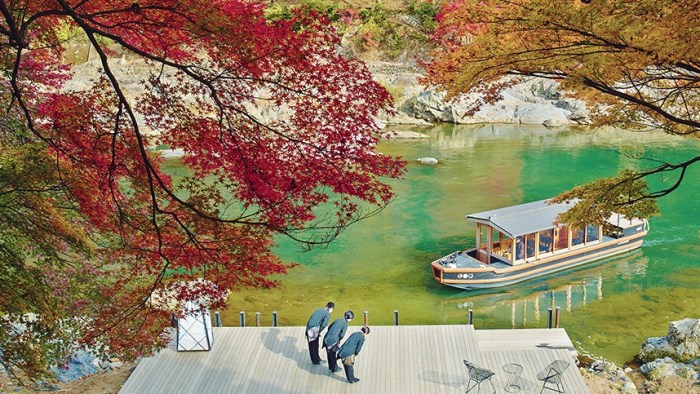
When, by mid-afternoon, our sightseeing was over for the day, our guide dropped us off at what looked like a small enclosure adjacent to a tranquil river. As it was raining and a bit cool, we were immediately offered hot tea and a Japanese cookie. Within a few minutes, we were escorted from our waiting area to a small river boat. From there, it was a 15-minute ride down river to the Hoshinoya.

Hoshinoya Boat - 01
Our boat driver taking us down river to the Hoshinoya

Hoshinoya - Arrival
Being greeted on our arrival

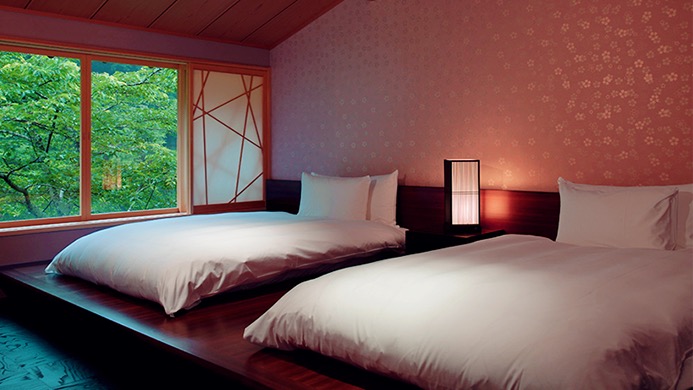
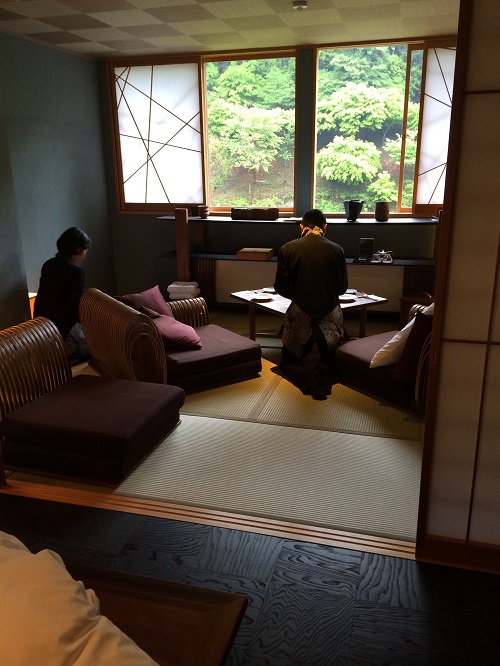
We were met at the dock and escorted to the check-in area and then to our lovely rooms, which consisted of a living room overlooking the river and separated by shoji screens from the double-futon bedroom. Adjacent was a lovely bathroom with a birchwood soaking tub. Next to the tub: a bottle of Saki. It was explained to us that, while it was certainly OK to drink the Saki, it’s real purpose was for soaking in the tub. Let me tell you: it was a fair exchange – after a long day of travel and sightseeing, it was delicious to soak in that Saki-filled tub.

Hoshinoya - 03
Our living room with river view

Hoshinoya - 04
Double futons in the sleeping area

Hoshinoya - AAC Bath
AAC CPA in the Saki-filled birchwood tub

Hoshinoya has a very well-regarded restaurant and chef (Ichiro Kubota) and we elected to have dinner there. When we were shown to our rooms, our host showed us two sets of pajamas: one for sleeping and another fancier set to wear around the premises. Also included were Japanese sandals and a slicker. We were encouraged, if we so desired, to wear our “going out” pajamas to dinner and we thought that was a great idea, especially as we were traveling light and it was still raining.

So we got ourselves all done up in our fancy  pajamas, sandals and slickers, and made our way to the restaurant, assuming that – because it was a Monday evening – the restaurant would be quiet and we’d have an intimate dinner. 

Well, we were half-right.

As we entered the restaurant, we could hear a somewhat boisterous group singing a Japanese version of “Happy Birthday”. And guess what? Everyone there was fully dressed: jackets and ties for the men, fancy dresses for the ladies, and AAC CPA and I schlumphing around in our pajamas!

However, we were taken away from the other diners and shown into our own private glass-enclosed dining room, which was surrounded by a beautiful garden in full bloom. It was magical and like being in our own private world.

The Hoshinoya offers a multi-course dinner, which one of us was excited to sample. Someone else begrudgingly agreed to go along with it (no names, please). There were just a couple of hiccups along the way, for instance: when the uncooked octopus leg made an appearance at the table and somebody shrieked in response. But, mostly, we had a wonderful dinner with wine and saki pairings and the most discreet and attentive service imaginable.

Upon returning to our rooms, which had been turned down for the night, we immediately fell into bed (that is, we fell into futon) and had a lovely night’s sleep – it was so quiet, except for the sound of a light rainfall, that you couldn’t help but be lulled to sleep.

Hoshinoya View
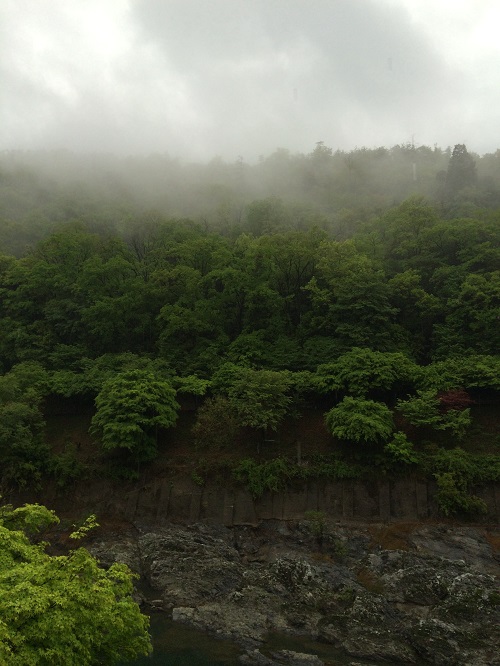
Foggy and mysterious early morning river view

The next morning, we had the option of ordering breakfast in the room (at an additional charge), and we totally took advantage of it. A discreet knock at the door at the appointed time, and we were greeted by 2 smiling faces. They came in, reconfigured the furniture for dining, and prepared our breakfast for us. We were totally charmed by the service and the food was delicious.

Hoshinoya Breakfast - 01
Our breakfast is prepared for us en suite

Hoshinoya Breakfast - 02
And a lovely breakfast spread

After breakfast, we made preparations to depart, as we had another half day of sightseeing before boarding our Bullet Train for the return trip to Tokyo.

Hoshinoya - AAC
AAC CPA on his way back to our river boat to reenter the real world

A stay at the Hoshinoya is not inexpensive – it should rightly be considered a “splurge” – but it is also a once-in-a-lifetime experience.

So it turns out that we were given great advice, which I now pass on to you – our brief visit to Kyoto and the Hoshinoya was an enchanting experience and not to be missed.

TRAVEL TIP: Hoshinoya – Kyoto